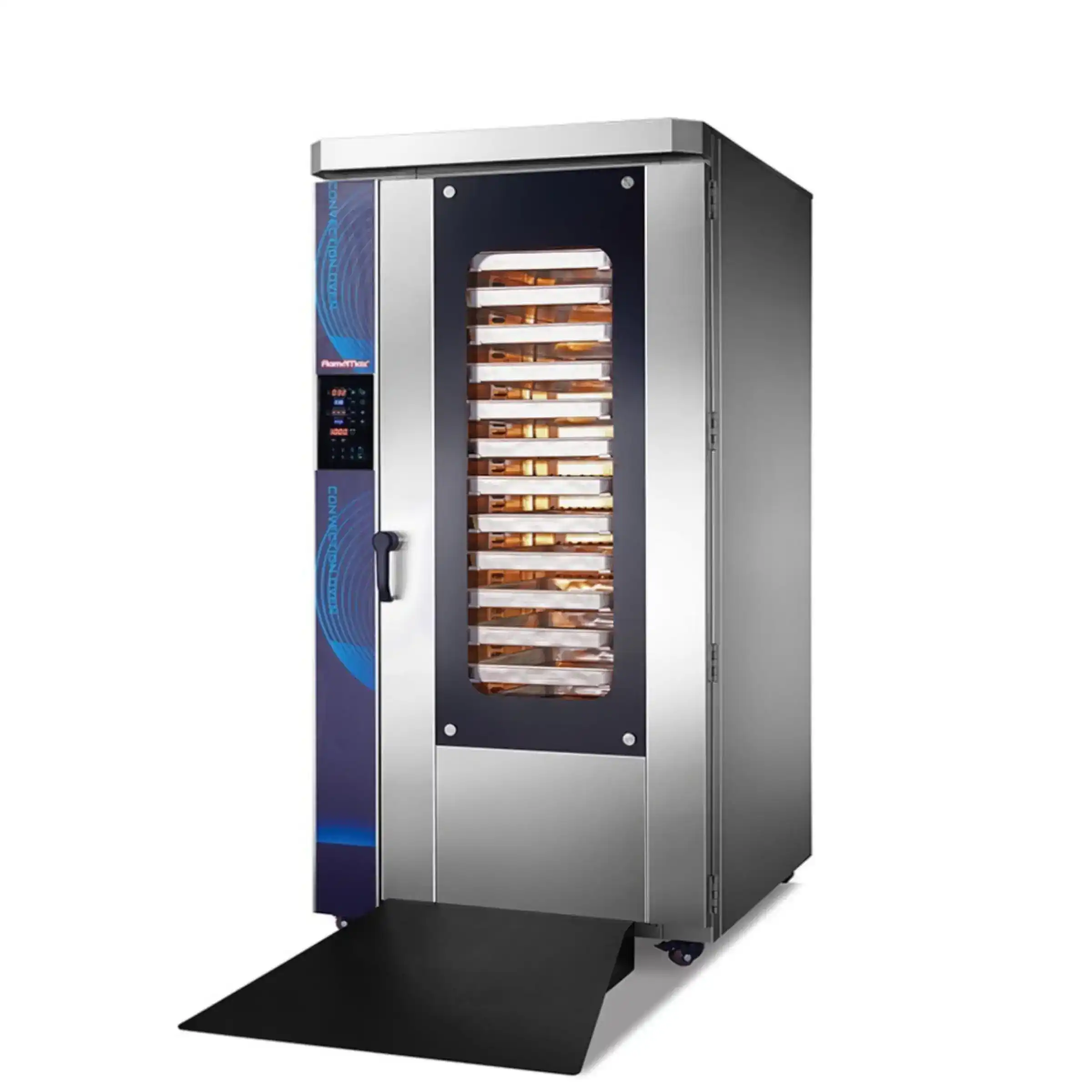
Why Convection Ovens Are Gradually Replacing Deck Ovens
Over the past two years, GLEAN has seen more customers choosing convection ovens for everyday commercial baking. For businesses comparing practical equipment within a limited budget, ease of operation and repeatable results are becoming important purchasing considerations.
This shift is particularly relevant to bakeries, cafés and food businesses producing trays of croissants, pastries, cookies and bread. Buyers want equipment that fits their products, makes routine production easier and offers room to grow.
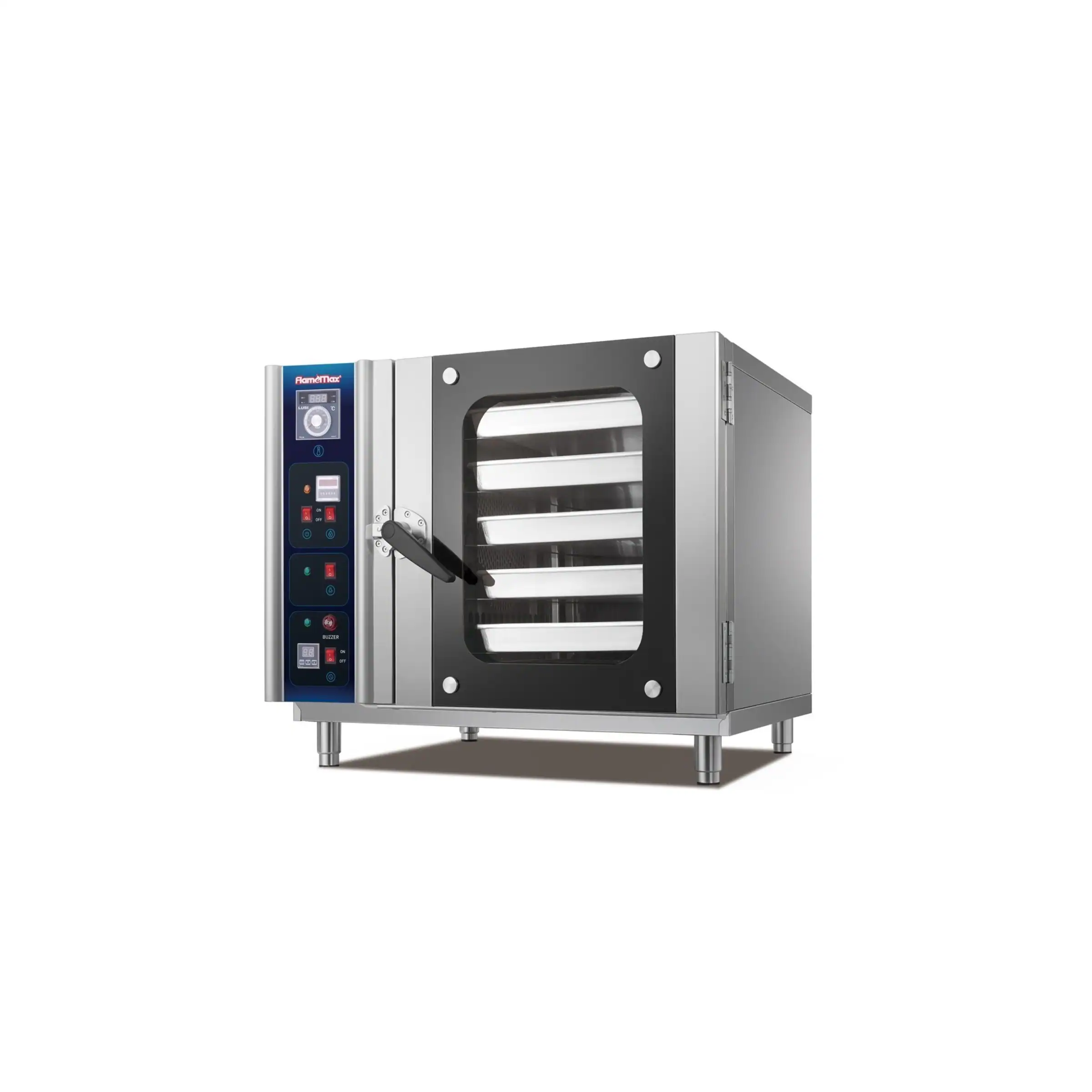
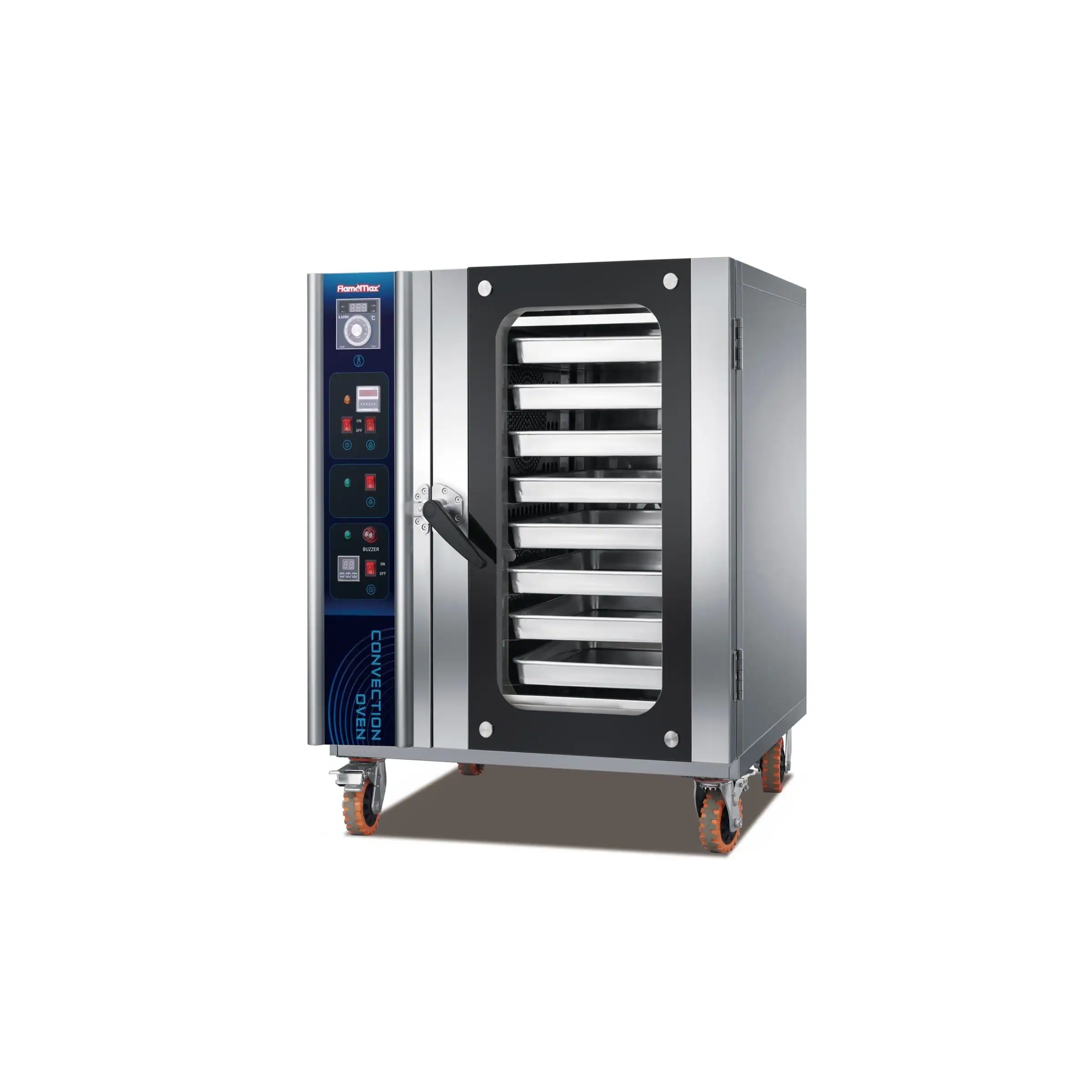
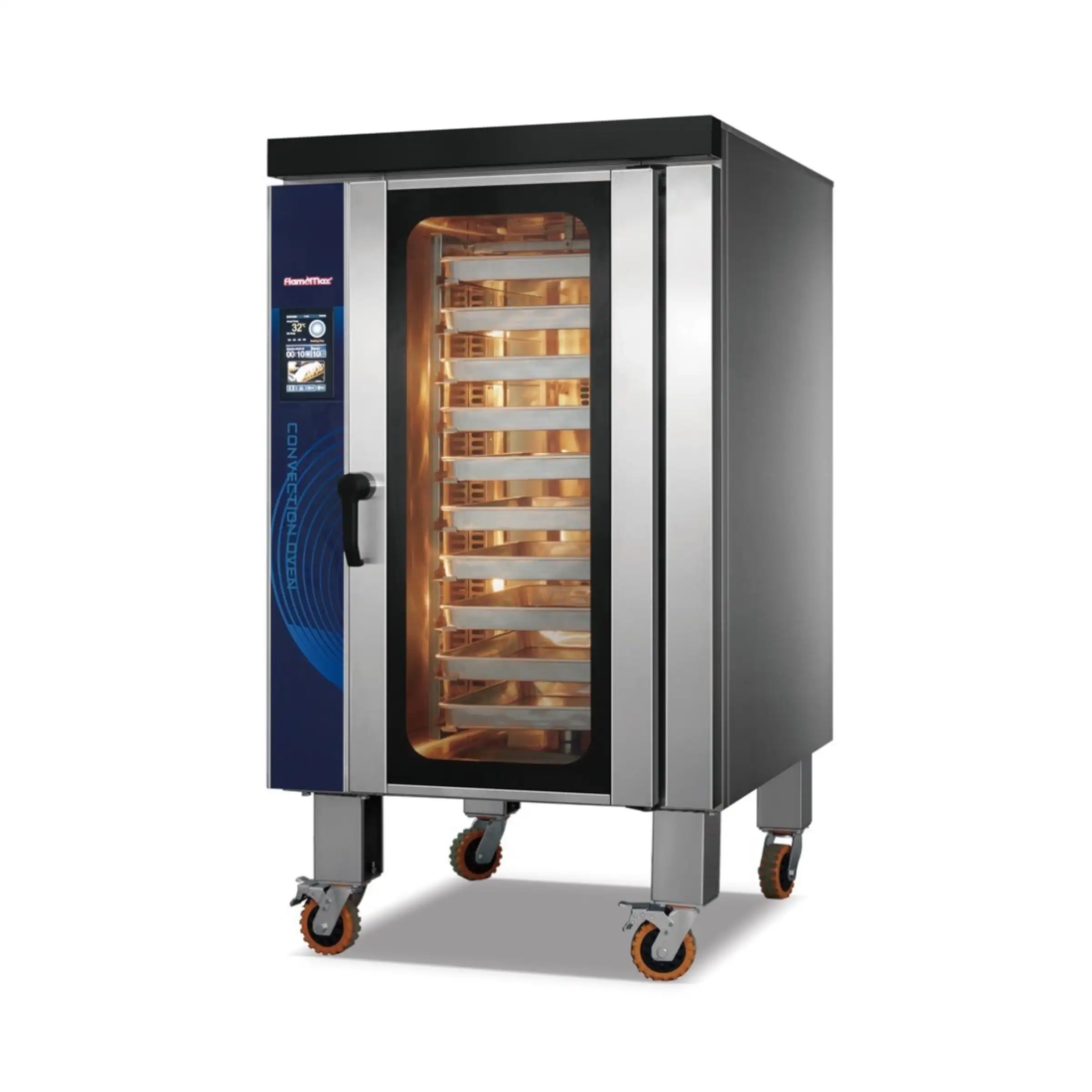
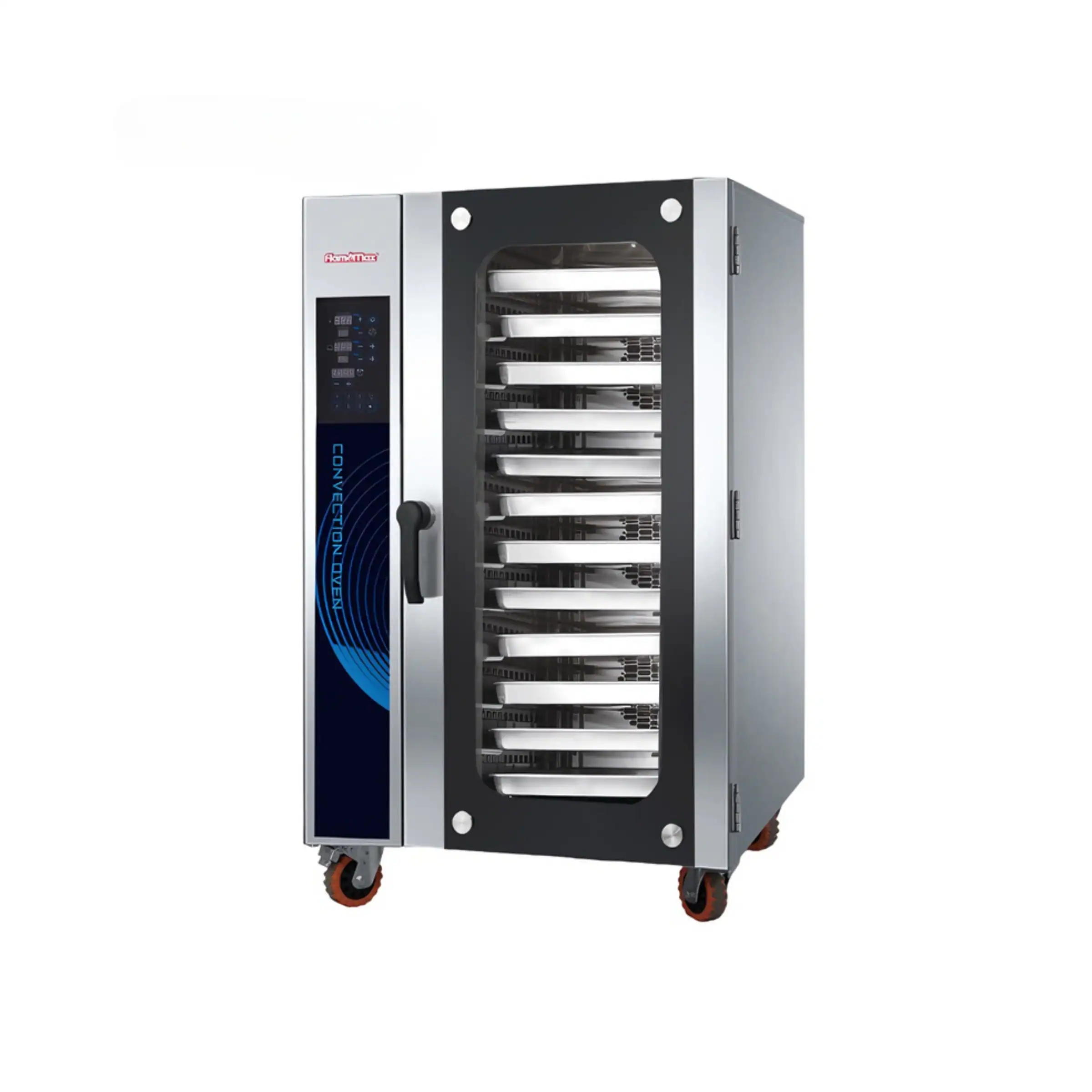
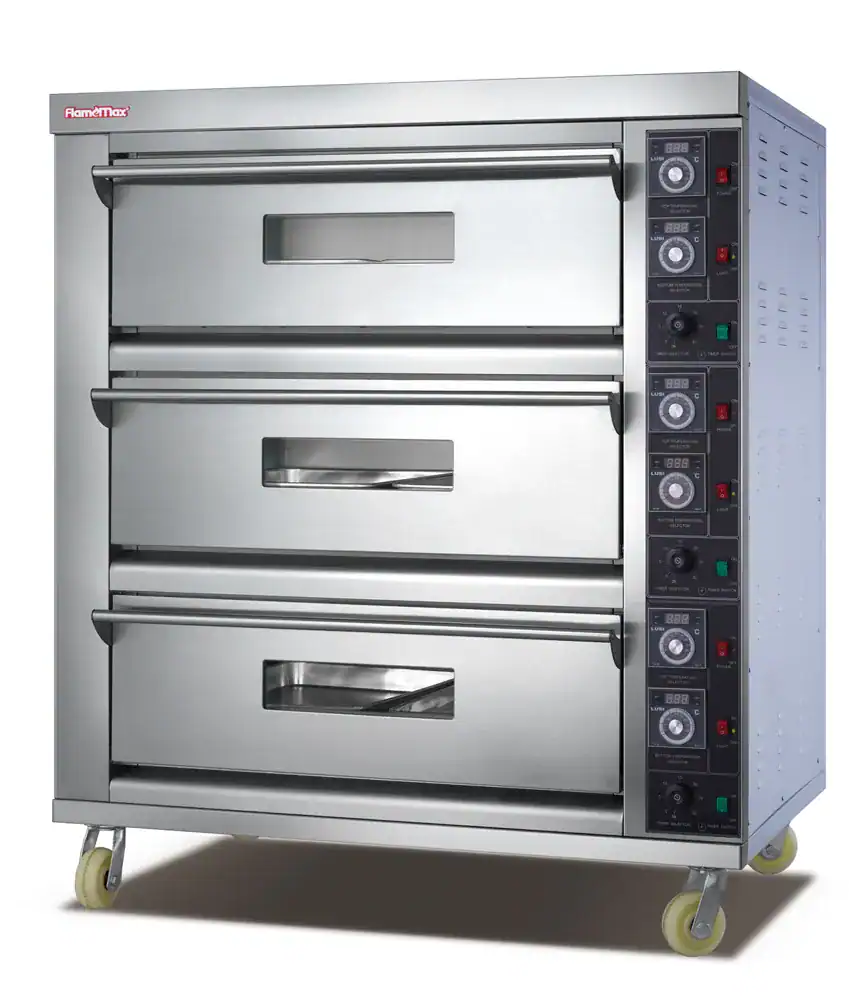
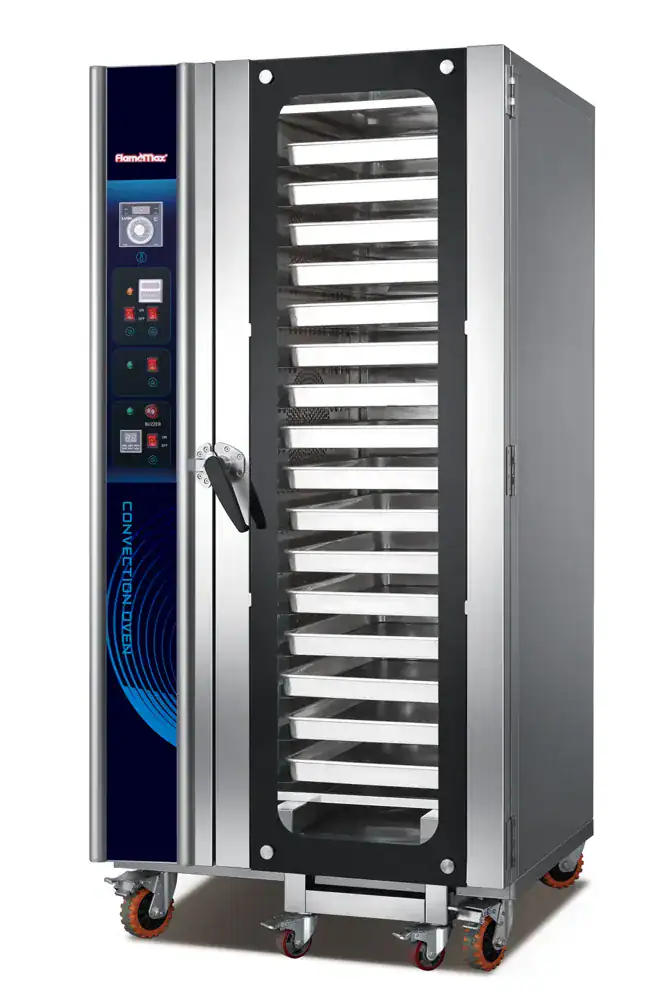
Deck ovens still have useful strengths. However, convection ovens are becoming an attractive alternative for many tray-based baking tasks. This deck oven vs convection oven comparison explains what is driving that change and where a rotating-rack model can add value.
The practical comparison
At a Glance: Deck Oven vs Convection Oven
The comparison below focuses on conventional bakery deck ovens and basic commercial convection ovens. Exact controls and features vary by model.
|
What matters to the buyer |
Deck oven |
Convection oven |
|---|---|---|
|
Heating approach |
Typically uses heat from above and below, with heat transferred through the deck or baking tray |
Uses a fan to circulate heated air around the baking chamber |
|
Everyday settings |
Often involves balancing top and bottom heat as well as baking time |
Usually centres on chamber temperature and baking time, with moisture settings where available |
|
Baking arrangements |
Separate chambers can support different settings when independently controlled |
Trays within one chamber share the same temperature setting |
|
Managing uneven results |
Heat settings, loading positions and, where necessary, tray turning may need adjustment |
Air circulation helps distribute heat; rotating-rack models also change tray orientation during baking |
|
Saved programs |
Available on some digital models |
Available on some digital and touchscreen models |
|
Capacity comparison |
Check usable trays per chamber and the number of chambers |
Check tray count, tray dimensions, spacing and loading requirements |
|
A useful starting point |
Production that benefits from separate chambers or independent top and bottom heat |
Repeated batches of tray-baked products using a shared baking setting |
— 01 — Everyday operation
Everyday Operation Can Be Easier to Standardise
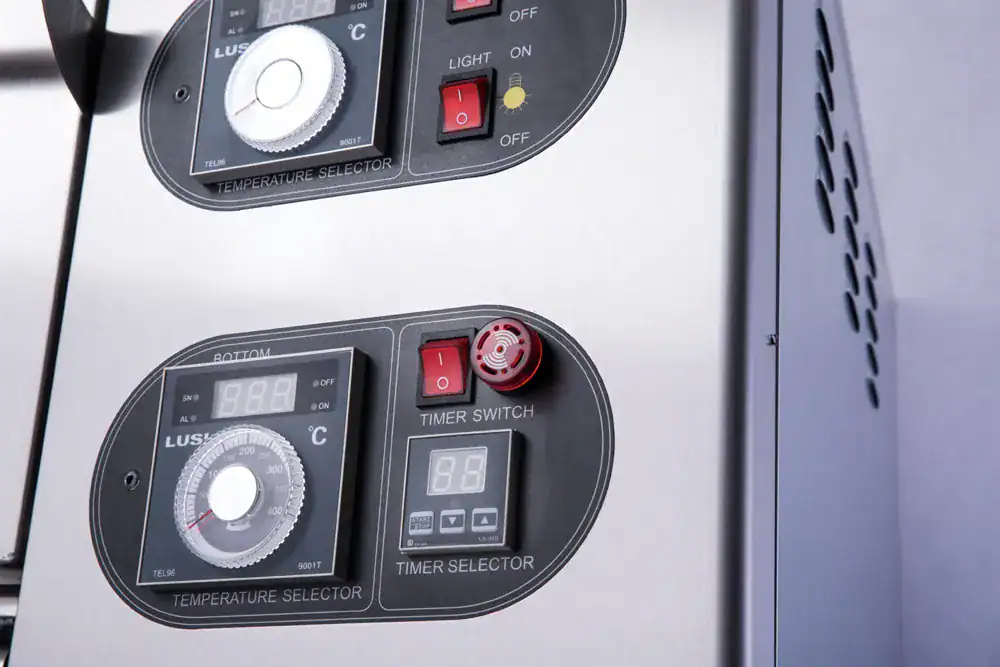
A conventional electric deck oven often gives the operator separate control over top and bottom heat. This flexibility is useful, but establishing the right balance adds another decision to the baking process.
If the top colours too quickly while the base remains pale, the operator needs to consider how the heat is distributed as well as the baking time.
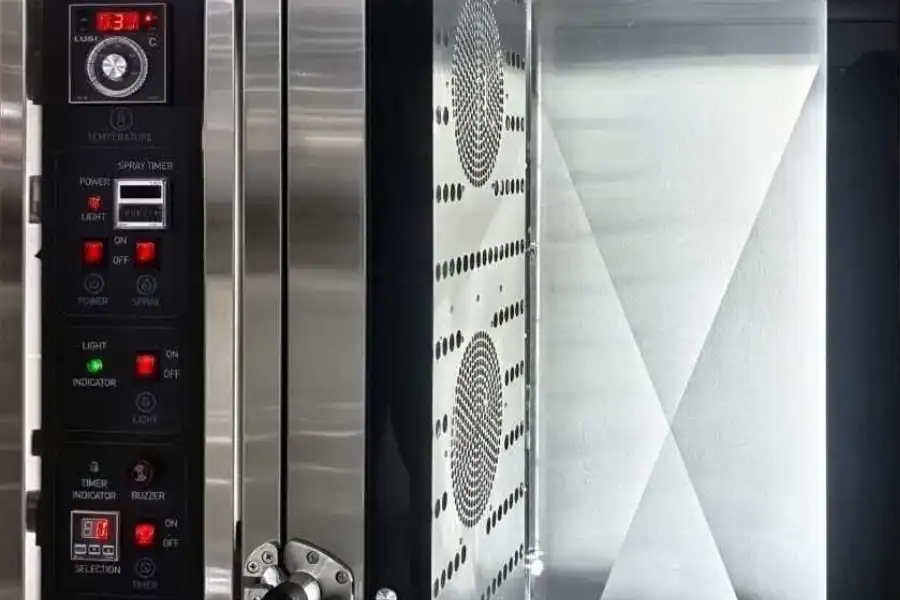
A basic convection oven generally presents a simpler set of routine decisions: choose the temperature, set the time and load the trays correctly. Where the oven includes moisture injection, the operator also selects how to use it for the product.
Both types need an initial trial to establish suitable settings. Once those settings are established, a convection oven can make repeated production straightforward to organise and explain to another operator.
— 02 — Consistent heat exposure
Circulating Hot Air Helps Improve Baking Uniformity
In a convection oven, a fan moves heated air through the chamber and around the trays. The purpose is to distribute heat more evenly and reduce differences in exposure between positions.
This matters when a business wants a batch of croissants or cookies to have a consistent appearance. Similar products should reach the intended colour and finish without some positions becoming noticeably darker than others.
Good loading remains part of the process. Tray spacing, product arrangement and sufficient room for air movement all contribute to the result. Filling every available space too tightly can restrict the airflow the oven relies on.
For buyers, the useful question is whether the oven’s airflow and tray arrangement suit their normal production load.

— 03 — Rotating-rack options
Rotating-Rack Models Add Another Way to Balance Heat Exposure
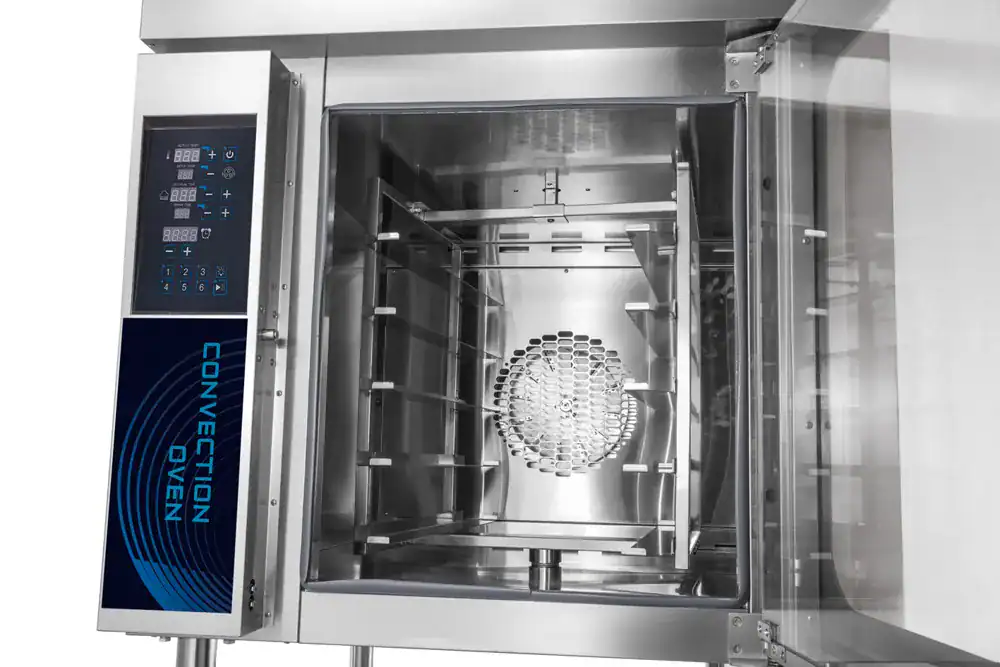
A rotating convection oven combines circulating hot air with a rack that turns during baking. This changes the trays’ position and orientation relative to the airflow, helping balance heat exposure.
The practical benefits can include:
• More consistent exposure to the circulating air.
• Less manual tray repositioning during the baking cycle.
• A simpler routine for repeated batches.
If your team turns trays midway through baking, a rotating-rack model is worth considering. Rack rotation moves the trays; fan reversal changes airflow direction. Confirm the selected model’s features and suitable loading and baking settings.
— 04 — From pastries to bread
Convection Ovens Cover Many Everyday Bakery Products
Convection ovens are widely offered for pastries, bread and other tray-baked products. For businesses choosing between a deck oven and a convection oven, the everyday menu is a useful starting point.

|
Product |
What to consider when choosing an oven |
|---|---|
|
Croissants and Danish pastries |
Space for expansion, consistent colouring and a suitable baking setting for the dough |
|
Cookies and biscuits |
Even spacing and consistent thickness, together with an appropriate time and temperature |
|
Muffins |
Suitable moulds, clearance above the product and airflow around the loaded trays |
|
Baguettes and other breads |
Product length, tray arrangement and the moisture conditions needed for the intended crust and expansion |
|
Frozen bakery products |
Whether the product needs proofing, baking from dough or finishing from a partially baked state |
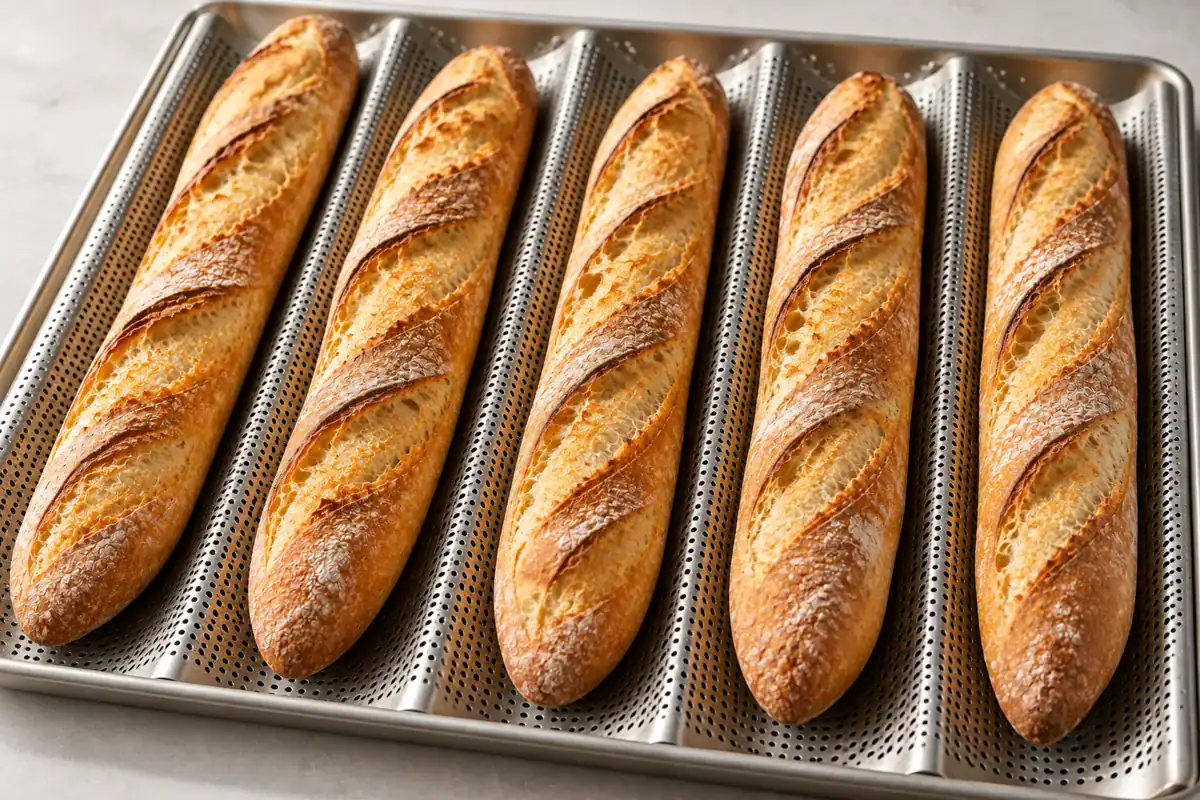
Baguettes deserve particular attention. Even heat distribution is useful, but the desired result also depends on dough preparation, proofing and moisture during baking. An oven intended to bake fresh baguette dough may need different capabilities from one used mainly to finish partially baked frozen bread.
Choosing around the products you actually sell is more useful than choosing by oven capacity alone.
— 05 — The complete baking cycle
Production Efficiency Includes More Than Baking Time
Consider the complete batch:
01
Prepare & load
Preparing and loading trays.
02
Set & check
Selecting or checking the settings.
03
Bake & monitor
Monitoring the bake and repositioning trays where needed.
04
Unload & repeat
Unloading finished products and preparing the oven for the next batch.
Basic manual controls
A basic manual model keeps routine operation straightforward: set the temperature and baking time, then load the trays correctly. It does not store programs, so the operator selects the settings for each batch.
Saved baking programs
Saved programs make repeat settings easier to recall. GLEAN’s digital rear-blower 5-tray models store six user-configured programs. Customers establish settings for their own products and save them for future batches.
Choose the controls around how often you repeat recipes and how many settings your team needs to recall. Suitable loading capacity and a rotating rack may further simplify daily production. For a closer look at these options, read our 5-tray convection oven selection guide.
— 06 — Tray size and usable space
Compare Usable Tray Capacity Before Choosing
Flat baking trays
A flat tray provides an open surface for arranging croissants, cookies and other tray-baked products. Usable capacity depends on product size, spacing and room for expansion, as well as the tray dimensions.
Baguette trays
A baguette tray uses shaped channels to organise elongated loaves. Check loaf length, channel spacing and room for expansion. The same outer tray size does not mean the same number of finished products.
The GLEAN 5-tray models covered in our selection guide use 400 × 600 mm trays. Compare ovens using the same products, tray dimensions and loading requirements, rather than tray count alone. Browse the GLEAN convection oven range to compare available configurations.
— 07 — FAQ