
How to Choose an 8-Tray Convection Oven
Choosing an 8-tray convection oven starts with the space available and the settings your team repeats. Both GLEAN configurations hold the same number of trays, but the fan position, cabinet dimensions and control panel differ. Compare these practical details before treating tray count as the whole specification.
This guide compares the basic side-fan manual model with the rear-fan digital model. Both use a stationary removable rack. The choice is between direct batch settings and stored programs, alongside the footprint that fits your kitchen.
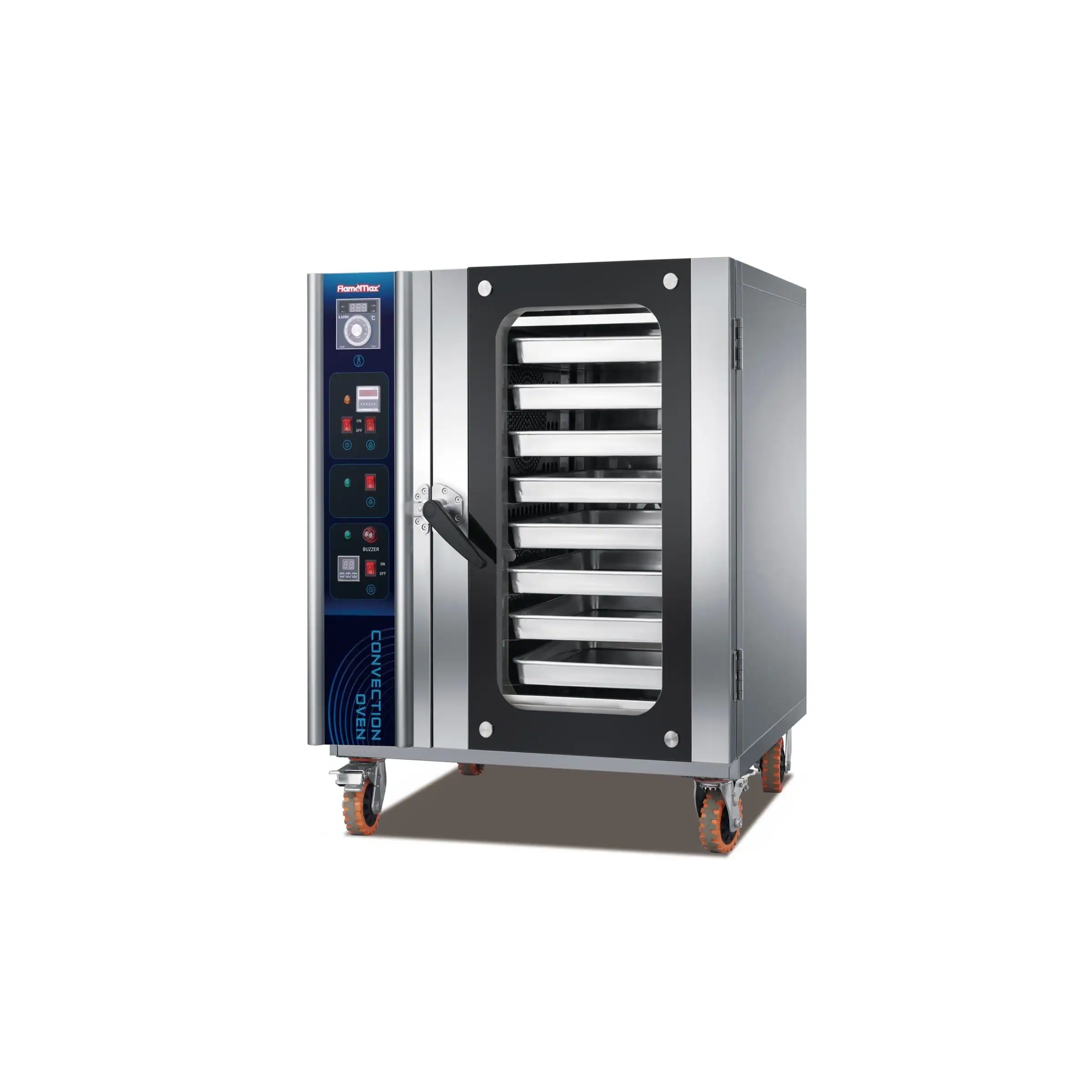
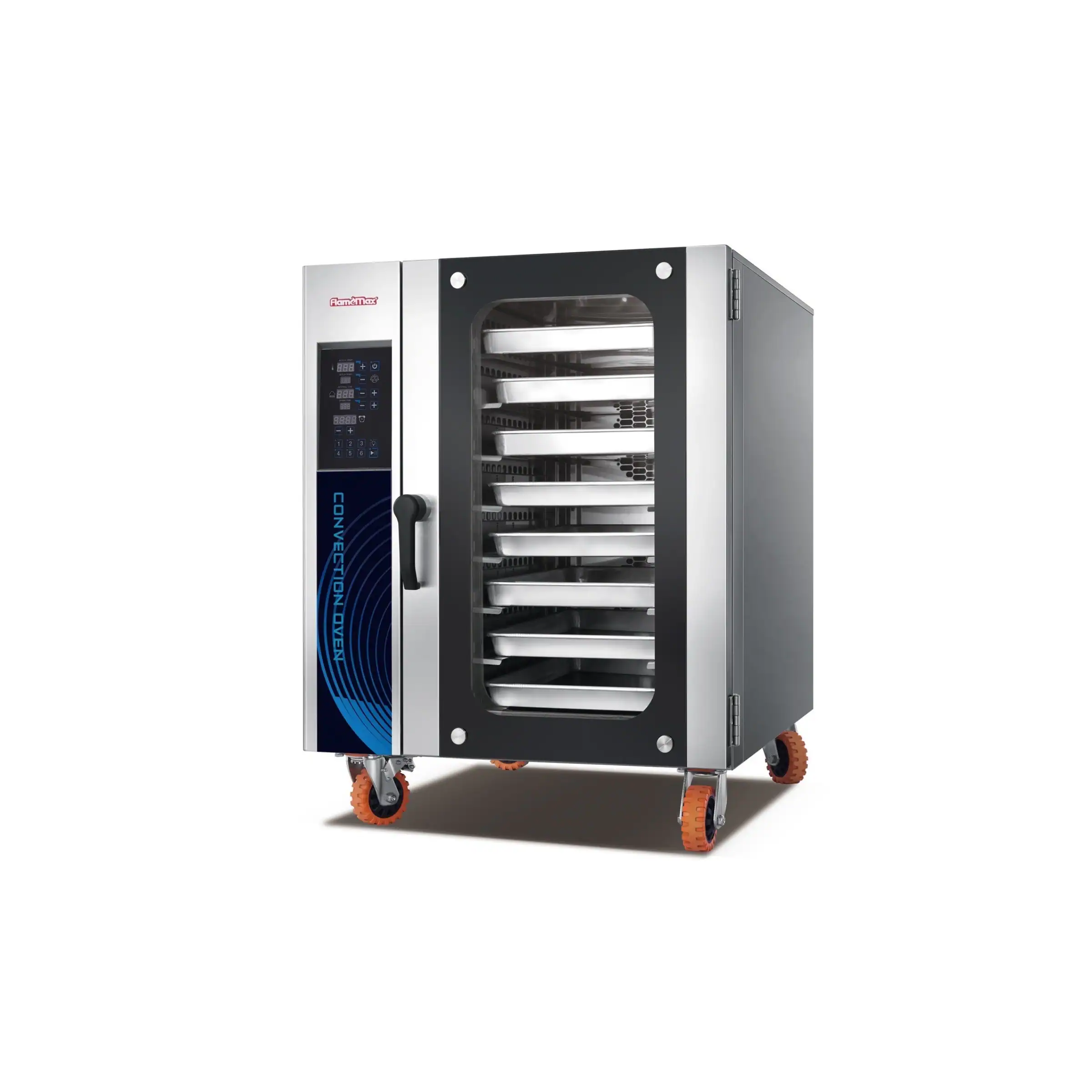
Compare Two 8-Tray Convection Oven Configurations
Both configurations accommodate eight 400 × 600 mm trays and are offered in electric and gas versions. Neither model rotates the tray rack during baking. The table highlights the differences that affect installation and everyday operation.
|
Configuration |
Electric / gas model |
Rack during baking |
Fan position |
Controls and program storage |
|---|---|---|---|---|
|
HEA-8 / HGA-8 |
Stationary |
Side |
Manual controls; no stored programs |
|
|
HEA-8P / HGA-8P |
Stationary |
Rear |
Digital controls; 6 user-configured programs |
Start with your available installation depth and whether your recipes benefit from saved settings. A different fan position does not by itself establish better results for every product; compare the selected model using your intended tray load.
Side or Rear Fan: What Changes in Practice?
The basic 8-tray convection oven positions its fan beside the chamber, while the programmable model places it at the rear. Both fans reverse direction, and both tray racks remain stationary during baking. Fan reversal and rack rotation are separate features.
The side-fan cabinet is 900 mm deep, compared with 1050 mm for the rear-fan version. It is also wider: 930 mm rather than 850 mm. Check both dimensions against the actual kitchen layout instead of assuming one configuration is smaller in every direction.
Test your usual eight-tray load and compare colour and finish across the rack. Keep the tray arrangement consistent so you can judge whether the chosen model needs any manual tray repositioning during your normal bake.
Allow space around products as they expand. The usable load depends on your tray layout and product size, not only the number of rack positions.
CONTROL PANEL EXAMPLES
Choose Controls Around the Settings You Repeat
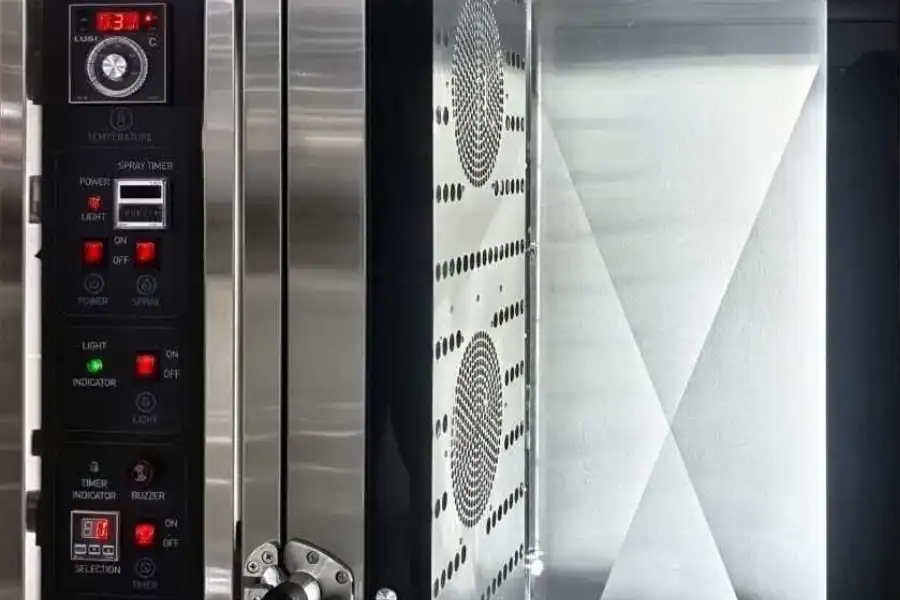
Manual Controls: Set Each Batch Directly
The basic 8-tray convection oven provides direct adjustment of temperature, baking time and spray operation. Its panel includes digital readouts, but it does not store baking programs. The operator enters the required settings for each batch.
This option suits a team that prefers direct controls and works with a manageable set of regular settings. Keep those settings clearly documented so another operator can follow the same process.
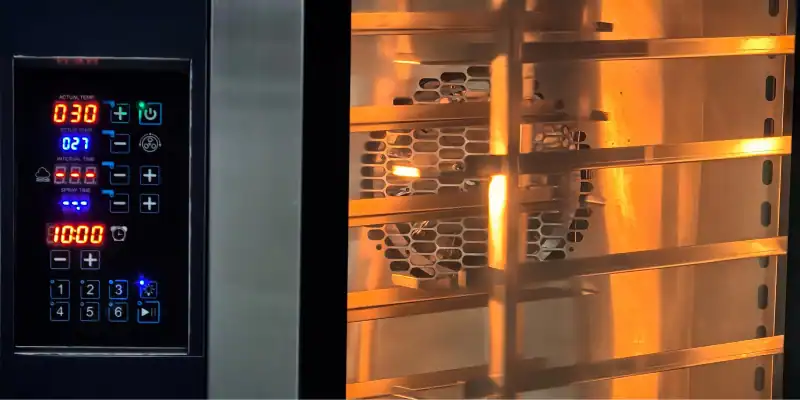
Digital Controls: Recall Six Saved Programs
The rear-fan digital model stores up to six programs that you configure for your products, rather than factory-installed food recipes. Save the temperature, time and other available settings after checking them with your normal tray load.
Choose this option when operators repeatedly recall the same settings or switch between several regular products. Keep a simple record of each program number and the product and tray load it is intended for.
Check Tray Spacing, Installation Space and Utilities
Compare Dimensions Before Finalising the Layout
An 8-tray convection oven must accommodate both the tray format and the product after expansion. Both models use 400 × 600 mm trays; the listed tray pitch and cabinet dimensions differ.
| Configuration | Oven dimensions: W × D × H | Tray spacing | Rated electric input |
|---|---|---|---|
| Basic manual | 930 × 900 × 1100 mm | 90 mm | 9.4 kW |
| Rear-fan digital | 850 × 1050 × 1140 mm | 100 mm | 11.9 kW |
Tray pitch is the spacing between tray levels, not a maximum product-height specification. Allow for the tray or mould, product expansion and air circulation. Rated input is shown for the electric models; actual energy use varies with temperature, loading and the baking cycle.
Measure the Oven Position and Access Route
Check doorway openings, turns and the final oven position. Allow the required installation clearances and enough working space to open the door and handle hot trays. Cabinet dimensions alone do not describe the complete operating area.
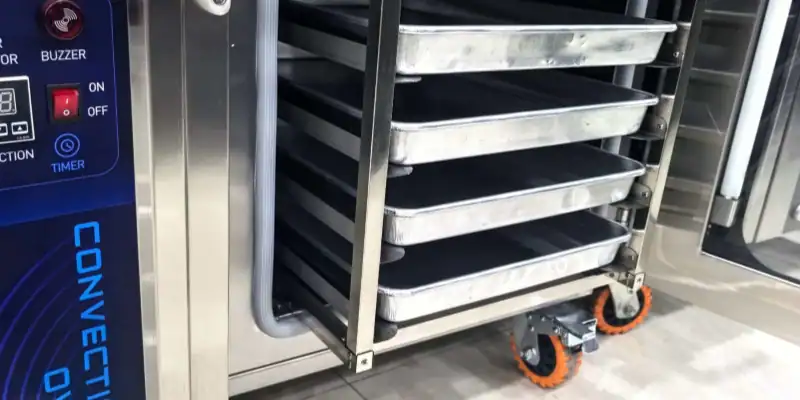
REMOVABLE INTERNAL RACK
Plan Access for Tray Handling and Cleaning
Both 8-tray configurations have a stationary internal rack that can be removed for access to the chamber. This is a removable rack, not the roll-in trolley arrangement used on the 16-tray range.
Plan a clear route between preparation, baking and cooling. Consider where trays will be placed before loading and after unloading, and whether operators can comfortably reach the tray levels during normal work.
Include routine cleaning in the layout decision. Access to the tray supports, chamber walls and floor should remain practical after installation. Follow the supplied operating and cleaning instructions.
Match the Energy Version to Your Site
The electric models require 380 V, 50 Hz, three-phase power. Alongside voltage and frequency, compare their rated input in the table with the electrical capacity available at the installation site. Gas models also require electricity; confirm their separate electrical and gas specifications.
Estimate running costs from the actual production schedule and local energy prices. Rated electrical input and gas heat input are different specifications, not direct predictions of the cost of a baking shift.
For background on energy used during cooking and while holding temperature, see ENERGY STAR’s explanation of commercial oven energy use. Compare the selected model’s measured performance and your local energy costs before estimating running costs.
A Practical Way to Narrow the Choice
Use the priorities below to shortlist a configuration. Then check the tray loading, installation route and utility requirements together.
| Your priority | Configuration to consider |
|---|---|
| Direct settings and less available installation depth | Basic side-fan manual |
| Saved settings with a narrower but deeper cabinet | Rear-fan digital |
| Rotating trays during baking | Compare another capacity or configuration |
Choose the 8-tray convection oven that meets both your space limits and your control requirements. If the rear-fan cabinet fits, compare the benefit of six stored settings with the simpler routine of the manual model.
If you need a rotating rack, compare the 10-tray convection oven options. For full-trolley loading, see the 16-tray selection guide. You can also browse the complete GLEAN convection oven range.